Wildlife of the Louisiana Swamp: A Field Guide for Visitors
People come to the Louisiana cypress swamp expecting alligators. They get alligators. They also get a hundred other species, most of them more visible and more interesting than the alligators, and most first-time visitors leave knowing about three of them. This is the longer list, written from 12 seasons of paddling Manchac, Honey Island, and the Lower 9th Ward bayous five times a day.
The cast: who lives in a Louisiana swamp
A healthy southeast Louisiana cypress swamp like Manchac supports something on the order of 250 vertebrate species across reptiles, birds, mammals, fish, and amphibians, plus thousands of invertebrate species and dozens of plant species. The wildlife you actually see on a 2-hour kayak tour is a small fraction of that, but it’s a fraction worth knowing the names of.
We’ll go category by category. Inside each, we’ll flag what’s common, what’s a treat, and when in the year you’re most likely to see it.
Reptiles
American alligator (Alligator mississippiensis)
The headliner. Adult alligators in Louisiana average 8 to 13 feet, occasionally larger. They are not interested in kayaks, not interested in humans, and not interested in approaching anything that doesn’t smell like food. The alligators that approach motor boats are either being baited or have been habituated by past baiting. The alligators we see on kayak tours are wild, doing their own thing, and uninterested in us. Here’s the longer alligator post, including how to distinguish them from crocodiles (you won’t see crocodiles in Louisiana, but the comparison is interesting).
When to see them: April through October. December through February they hibernate in mud burrows and you might not see one.
Snakes
Mostly water snakes (Nerodia species), all non-venomous, all common, all uninterested in kayaks. They look more dangerous than they are because they’re often mistaken for cottonmouths.
Cottonmouths (water moccasins) do live in Louisiana cypress swamps, but they’re uncommon on our tour routes and very rarely a problem. They’re slow, they’re nocturnal in summer, and they prefer logs and shoreline edges, not open kayak channels. In 12 seasons we’ve never had a guest bitten or even seriously approached.
When to see them: spring through fall. Always at safe distance.
Turtles
Red-eared sliders are the most common, sitting on cypress knees in groups of three or four, sliding off the edge as you approach. Snapping turtles exist but are rarely visible from the surface. Soft-shell turtles occasionally bask on logs in summer.
When to see them: spring and summer especially.
Birds
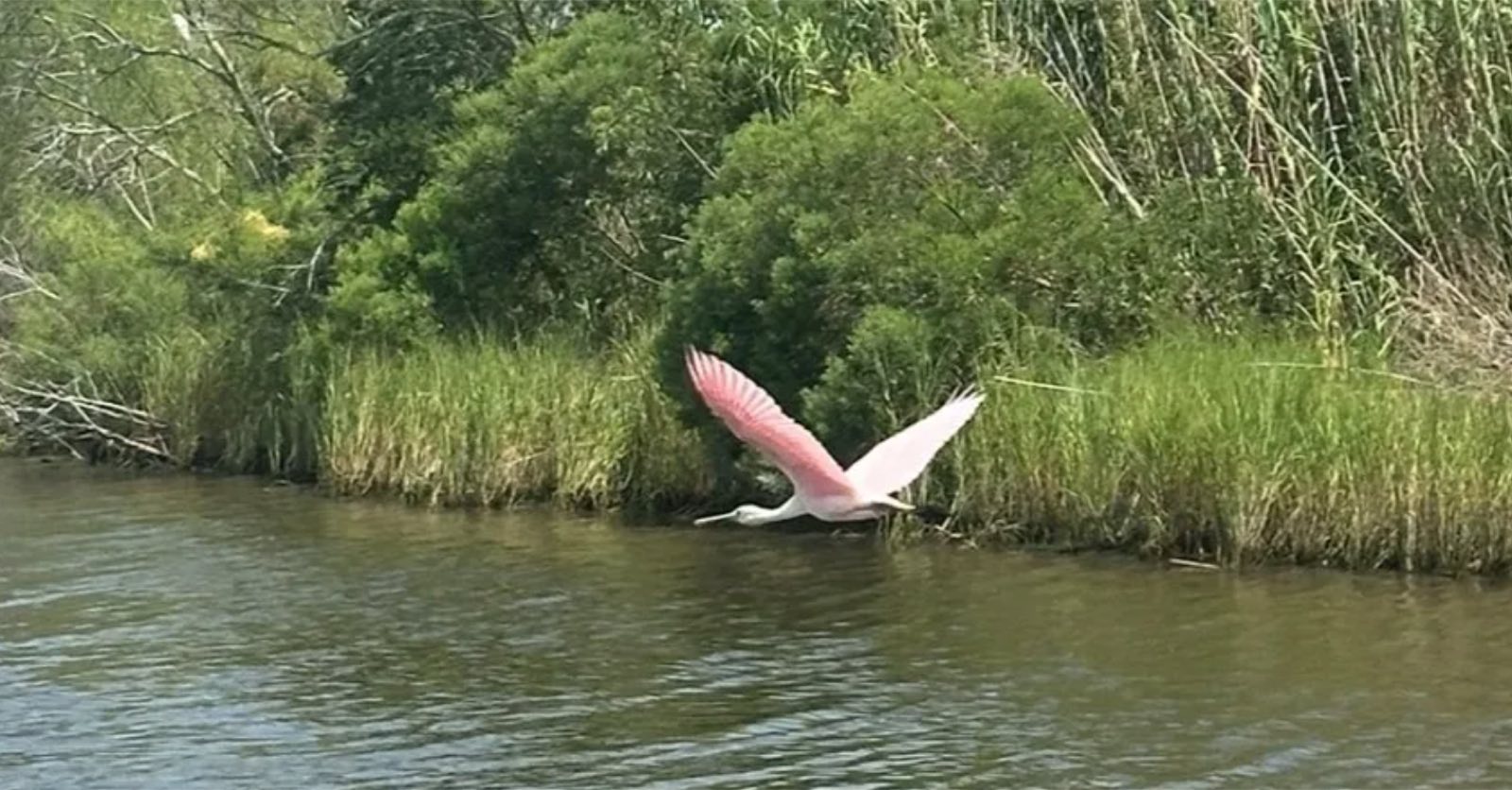
The bird life is what surprises most first-time guests. The list is long and the species are visible.
Wading birds
Great blue herons. Tall, gray-blue, statuesque. The most photographed bird on Manchac. They stand for half an hour at a time waiting for fish.
Great egrets. Pure white, almost as tall as a heron, snake-like neck, bright yellow bill. Common year-round.
Snowy egrets. Smaller than great egrets, white, with the famous “yellow slippers” (yellow feet on otherwise dark legs).
Little blue herons. Adults are slate-blue. Juveniles are white and often confused with egrets.
Tricolored herons. The trickiest of the wading birds. Less common, with blue back, white belly, rust-colored neck.
Green herons. Small, stocky, often missed because they sit still in low cypress branches.
Diving and fishing birds
Anhingas. Sometimes called “snake birds” because they swim with just their head and neck above water. They dive, hunt fish underwater, and sun their wings spread wide on cypress branches afterward. Distinctive silhouette.
Double-crested cormorants. Black, longer-necked than ducks, very strong divers.
Brown pelicans. Less common in the cypress proper, more common closer to lakes and bayous near the coast. Louisiana’s state bird.
Songbirds and small birds
Prothonotary warblers. A small, shockingly yellow songbird that nests in cypress cavities. Sometimes called the “swamp canary.” A favorite of birding guides because the color is hard to miss when you spot one.
Northern parulas. Smaller than prothonotaries, blue-gray and yellow, common in summer.
Yellow-throated warblers. Black, white, and yellow, often working high in the cypress.
Carolina wrens. Loud, vocal, present year-round.
Raptors
Bald eagles. Common in winter, less common in summer. Manchac has a known nesting pair. Spotting one is a tour highlight.
Red-shouldered hawks. Year-round, often seen perched on cypress edges.
Barred owls. Heard more than seen, especially at dawn. The famous “who-cooks-for-you” call.
Ospreys. Migrants, more common in winter and during migration windows.
The full bird list runs into the dozens. Our running birds-of-the-swamp guide has the longer version, and our birding-focused tours are for guests who want a guide who can name everything they’re seeing.
Mammals
Mammals are harder to see than birds in the swamp because most are crepuscular or nocturnal, but they’re around.
Nutria. Large semi-aquatic rodents, originally from South America, accidentally introduced and now invasive. Destructive to wetlands, easy to spot, often along the banks. They look like very large rats and they have orange teeth.
River otters. Less common, more exciting when you see them. Playful, curious, occasionally come close to kayaks.
Raccoons. Year-round, mostly nocturnal, but you’ll occasionally see one foraging at dusk.
White-tailed deer. The Maurepas WMA has a healthy deer population. You don’t usually see them from the kayak channels but you might see them from the boardwalks.
Black bear. Louisiana black bears live in the deeper Atchafalaya Basin. You will not see one on a Manchac tour. Worth knowing they exist.
Fish and amphibians
You won’t see most of the fish from a kayak, but they’re a huge part of why the bird life is so dense. Largemouth bass, channel catfish, bluegill, crappie, gar (including alligator gar in deeper water), and bowfin all live here. Fishing kayak tours run for guests who want to actually catch some of them.
Frogs are constant background noise from spring through fall. Bullfrogs, green frogs, leopard frogs. The chorus at dusk in early summer is one of the more memorable sounds of the swamp.
Salamanders and newts exist, mostly hidden in leaf litter. You won’t see them on the water.
Plants worth knowing
The wildlife story is incomplete without the plants. The cypress swamp is defined by what’s growing in it.
Bald cypress (Taxodium distichum). The tree. Deciduous conifer, feathery needles, distinctive knobby “knees” at the base. Lives 1,000+ years. Defines the canopy.
Water tupelo (Nyssa aquatica). Hardwood, often growing alongside cypress in the wettest spots. The fruit feeds migratory birds in late summer.
Spanish moss (Tillandsia usneoides). Not a moss. An air plant in the bromeliad family, related to pineapple. Pulls moisture from the air. Doesn’t harm the trees it drapes over. Indicates clean air.
Water hyacinth. Beautiful, purple-flowered, and invasive. Forms mats that block sunlight and starve native species. The state spends millions trying to control it.
Duck potato (Sagittaria). Arrow-leaf shape, common along the shallow edges. Important food for waterfowl.
Lily pads. American lotus, water lilies, occasional fragrant white blooms in summer.
Cypress knees. Not a separate plant, but worth flagging: the woody knobs that grow up from cypress roots are one of the iconic features. They grow up to about the high-water mark, and they’re nearly indestructible.
What you see when
Wildlife visibility shifts substantially across the year.
March through May. Peak bird activity. Migrating warblers, breeding herons and egrets, prothonotaries returning. Wildflowers along the banks. Alligators waking up. The most active months for pure species count.
June through August. Hot. Alligators are most reliably visible because they’re thermoregulating on the water surface. Bird density is high but daytime activity drops in the worst heat. Mosquitos are not the problem people expect at Manchac because moving water doesn’t host them.
September through November. Migration restarts in reverse. Cooler air. Fall color on the cypress. Less crowded.
December through February. The off-season. Alligators hibernate. Cypress goes bare. Bird species count drops but bald eagles are easier to see, and the swamp’s structure (water depth, channel layout) is more visible without leaves. Best time of day for wildlife is a separate post.
What’s threatened, what’s recovering
Louisiana cypress swamp wildlife is generally stable, with some exceptions.
Threatened: coastal cypress habitat is shrinking due to saltwater intrusion. As habitat shrinks, populations of cypress-dependent species (prothonotary warblers, certain frogs and amphibians) shrink with it.
Recovering: American alligators were endangered in the 1960s, off the list by 1987, and are now stable to abundant in Louisiana. Bald eagles followed a similar arc and are now common winter residents. Brown pelicans, also formerly endangered, have rebounded strongly.
Invasive problems: nutria continue to damage wetlands. Apple snails are an emerging concern. Water hyacinth is permanent. Wild boar (feral hogs) have established in parts of the Atchafalaya and southern parishes and are difficult to control.
The conservation work happening in places like Bayou Bienvenue, where Sankofa CDC has replanted over 100,000 cypress, is one of the more hopeful threads in the longer story.
Frequently asked questions
What animals live in the Louisiana swamp? American alligators, dozens of bird species (great blue herons, great egrets, prothonotary warblers, anhingas, bald eagles in winter, and many more), turtles, water snakes, river otters, raccoons, nutria, and a wide range of fish including largemouth bass, catfish, and gar. The total vertebrate species count for a healthy southeast Louisiana cypress swamp is around 250.
Are there crocodiles in Louisiana swamps? No. Louisiana has American alligators, not crocodiles. Crocodiles in the United States are limited to extreme south Florida. The closest you’ll come to seeing a wild crocodile from New Orleans is roughly 800 miles east.
What’s the most dangerous animal in a Louisiana swamp? Practically, sun exposure and dehydration. The wildlife is rarely a real threat to a careful visitor. Alligators avoid humans. Snakes are mostly non-venomous. Wild boar are dangerous but you won’t encounter them on a kayak tour. Wear sunscreen, drink water, follow your guide, and the swamp is one of the safer outdoor environments in the South.
When is the best time to see wildlife in a Louisiana swamp? March through May for the most species. June through October for the highest probability of seeing alligators. Early morning and late afternoon for the most active wildlife behavior on any given day. Winter for bald eagles.
If this list whetted your appetite, the next step is showing up. Our Manchac Mystic Kayak Tour runs five times a day, and the guide will name everything you see, including the species you didn’t know to ask about. Twelve people max, no motor, since 2013. Read our broader guide if you’re still comparing options.