Manchac Swamp: A Visitor’s Guide to the Cypress Forest 30 Minutes from New Orleans
Manchac is the second-largest bald cypress swamp in the United States, and it’s 30 minutes from the French Quarter. Most New Orleans visitors never see it. They drive past the exit on I-55 on their way to a plantation and never know what they missed.
This is the version we’d give a friend who asked. Where it is, what lives there, why the trees look like they do, the ghost story everyone hears once and remembers forever, and how to actually get out on the water.
Where Manchac is
Manchac sits between Lake Pontchartrain and Lake Maurepas in southeast Louisiana, mostly within the Maurepas Swamp Wildlife Management Area. The closest community is the village of Manchac, which is more or less a fish camp with a couple of seafood restaurants on the lake. Take I-55 north out of LaPlace and you’ll see the cypress canopy from the highway. From the French Quarter, it’s about a 30-minute drive in light traffic.
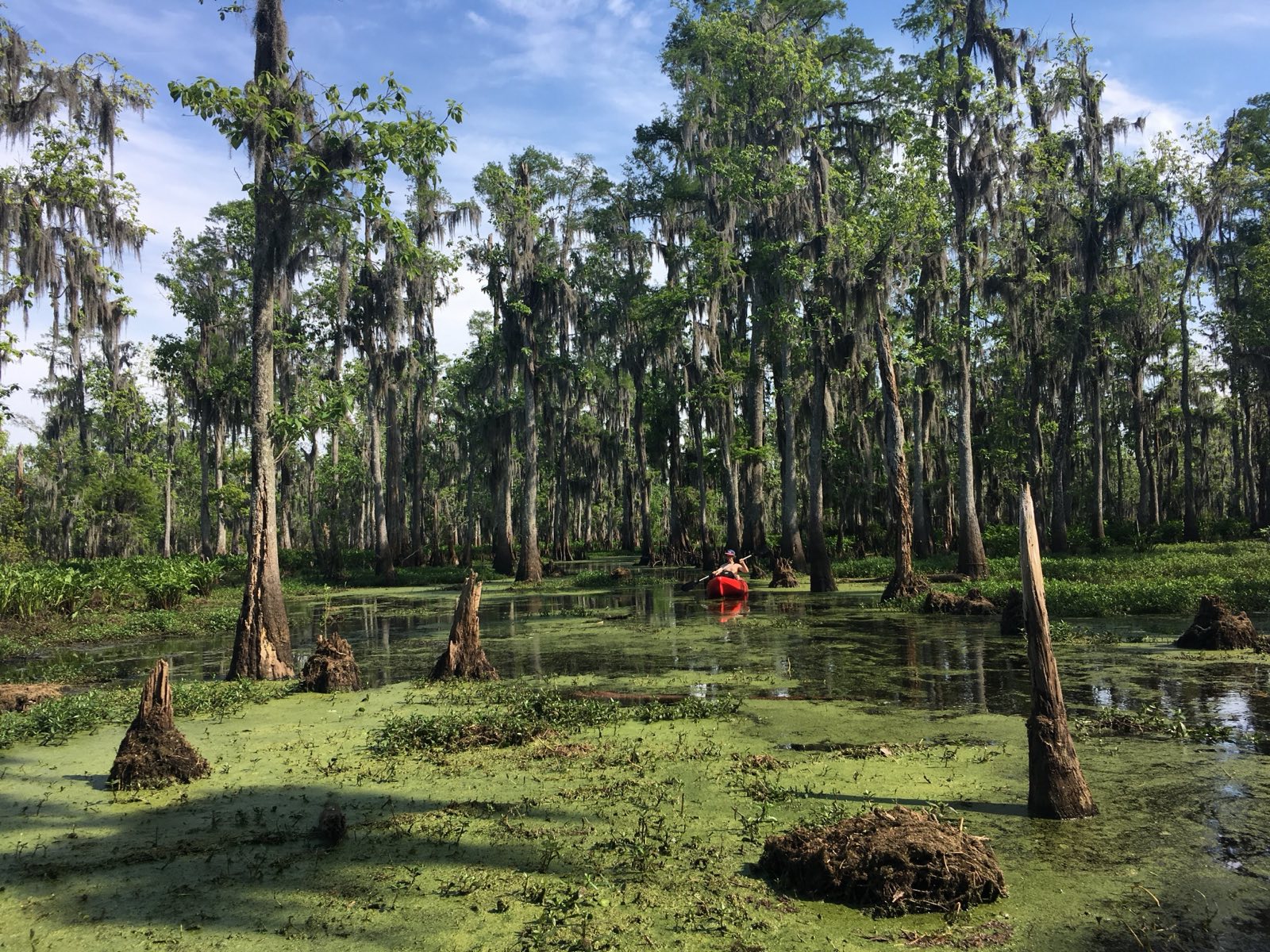
The swamp covers tens of thousands of acres of cypress and tupelo wetland, fed by Pass Manchac (the strait connecting the two lakes), the Tickfaw River, and a network of bayous and canals. It’s tannin-stained from decomposing leaf matter, mostly shallow (2 to 6 feet for most of the navigable area), and threaded with channels narrow enough that the cypress canopy closes overhead.
Why the trees look like they do
Bald cypress (Taxodium distichum) is the iconic Louisiana swamp tree, and Manchac has more of it than almost anywhere left in the country. Here’s what’s worth knowing.
Cypress knees. The strange knobby shapes that stick up out of the water around the base of every cypress are called knees. Botanists have argued for a century about what they actually do. Theory one: oxygen exchange for the submerged roots. Theory two: structural anchoring in soft mud. Theory three: nobody really knows. What we do know is they grow up to about the high-water mark, and they’re indestructible. You can see knees that pre-date the Civil War.
The trees are old. Old growth bald cypress can live well over 1,000 years. Most of the trees you’ll see at Manchac aren’t that old, because the area was logged hard from the 1850s through the 1950s. But the regrowth is a couple of centuries deep in some areas, and the trunks get massive. The biggest cypresses on our routes are wide enough that three guests holding hands can’t reach around.
Spanish moss isn’t moss. The gray-green plant draped over every cypress branch is Tillandsia usneoides, an air plant in the bromeliad family, related to the pineapple. It doesn’t harm the tree. It pulls moisture and nutrients from the air. It only grows in clean air, which is why you don’t see it in cities, and you do see it everywhere at Manchac.
The trees are dying anyway. Saltwater intrusion from coastal land loss is the biggest long-term threat to the cypress at Manchac. Cypress can tolerate brackish water, but not for long stretches. The map of the dying cypress in Louisiana looks a lot like the map of where the marsh has been replaced by salt water. We’ll come back to this.
The wildlife you’ll actually see
People come to Manchac thinking “alligators.” There are alligators. There’s also a lot more. Common sightings on a 2-hour kayak tour, in season:
- American alligators. Common from April through October, basking on logs or sliding into water as you approach. Here’s how to tell them from crocodiles (you won’t see crocodiles, but the difference is interesting).
- Great blue herons and great egrets. Statuesque birds that stand still in the shallows for half an hour at a time. Often the first big animal first-time visitors actually notice.
- Anhingas. Sometimes called “snake birds” because they swim with just their head and neck above water. They dive, they hunt fish, they sun their wings on cypress branches.
- Prothonotary warblers. A small, shockingly yellow songbird that nests in cypress cavities. The “swamp canary.” A favorite for our birding guides.
- Turtles. Red-eared sliders, mostly. They sit on cypress knees and watch you go by until you get too close, then they slide off the edge.
- Bald eagles. Less common but seen regularly, especially in winter and early spring.
- Nutria. Large semi-aquatic rodents along the banks. Invasive, destructive to wetlands, but easy to spot.
- Snakes. Mostly water snakes (non-venomous). Cottonmouths exist in the area but are uncommon on our routes and very rarely a problem.
The full bird list runs to several dozen species depending on season. Our running birds-of-the-swamp guide goes deeper.
The Julia Brown story
Every Manchac guide tells some version of this. We’ll tell ours.
Julia Brown was a real person who lived in Frenier, a small village on the lake at the edge of what’s now Manchac. She worked as a midwife and traditional healer in the early 1900s. The local lore is that she was also a voodoo practitioner, and that she said, while she was dying, that when she went, she’d take Frenier with her.
The day of her funeral was September 29, 1915. The Great New Orleans Hurricane made landfall during the service. Frenier was leveled. The cypress logging town nearby was leveled. Hundreds of people died, including most of the people who had come to bury her.
The historical record is real. The hurricane was real. The death toll was real. Whether Julia Brown was a voodoo queen who cursed the place or a respected community healer whose passing happened to coincide with the worst storm in the region’s history depends on which version you want to believe. Either way, the story has lasted 110 years for a reason.
Local guides argue about the details, and some of the most interesting versions of this story come from our own naturalist guides who’ve been telling it on tours for years.
Manchac vs. the other Louisiana swamps
If you’re choosing where to go, here’s the comparison most New Orleans visitors are actually trying to make.
Manchac. 30 minutes from New Orleans. Densest cypress canopy of any accessible Louisiana swamp. Most consistent wildlife year-round. Easiest to get to. Most operators run here, which means more options for booking.
Honey Island. About an hour from New Orleans, off the Pearl River near the Mississippi line. Bigger area, wilder feel, but the wildlife is more dependent on water levels and the experience varies by season. Worth it as a second swamp trip, not a first one.
Bayou Bienvenue. 5 minutes from the French Quarter, in the Lower 9th Ward. Mostly a “ghost forest” of standing dead cypress killed by saltwater intrusion after Hurricane Katrina. Not a beauty trip, but the most powerful trip we run for guests who want to understand what’s happening to the Louisiana coast. Here’s the longer story.
Maurepas Swamp WMA. Manchac is technically a part of this larger Wildlife Management Area, which extends west and south. Most of the public access is through the same launch points we use.
For a first-time visitor, Manchac is the right answer. For a return visit, Bayou Bienvenue or Honey Island are both worth a separate trip.
How to actually visit Manchac
You have a few options.
Self-guided kayak rental
You can rent a kayak and paddle on your own if you have basic experience and your own transportation. Public launch points exist along Pass Manchac and at a few WMA access spots. You’re responsible for your own safety, weather decisions, and not getting lost in the canal network, which is easy to do because most of it looks similar. Here’s our rental setup for guests who’d rather paddle without a guide.
Guided kayak tour (this is the one most visitors should book)
A guide does three things you can’t do for yourself on a first visit: knows where the wildlife actually is, can identify what you’re looking at, and handles the navigation so you can pay attention to the swamp. Our standard Manchac Mystic Kayak Tour is 2 to 2.5 hours, $65 per person, group capped at 12, and includes the kayak, PFD, paddle, and a brief lesson before you push off.
If you want more time on the water, the Extended Manchac Tour runs 4 hours and gets you deeper into the canal system.
Motor tour
Several operators run airboat and pontoon tours from launch points around Manchac. Faster, bigger groups, more distance covered, less wildlife behaving naturally. We have a longer comparison post on the airboat-vs-kayak question if you’re trying to decide.
Free swamp walks
If you want a no-cost preview before committing to a tour, there are three free swamp walks in and around New Orleans, including a boardwalk near Manchac itself.
When to come
March through October is peak. Water is warm, gators are active, birds are migrating and nesting. April and May have wildflowers and the most birdsong. September and October are quiet, the heat backs off, and the migration restarts in reverse.
Summer (June, July, August) is hot and humid. Tours still run. Mosquitos are not the problem most visitors expect, partly because the moving water at Manchac doesn’t host them the way standing pools do. Bring sun protection and water.
December through February is the off-season. The swamp is quieter. Gators hibernate. The trees go bare. It’s still beautiful, just different. We run tours year-round, weather permitting.
Time of day matters too. We have a longer post on the best time of day for wildlife.
What to bring
- Closed-toe shoes that can get wet (water shoes or old sneakers).
- Sunscreen, hat, sunglasses with a retainer.
- A windbreaker or light layer. The canopy is 10 degrees cooler.
- Water. We provide it on tours, but bring extra in summer.
- A waterproof case or dry bag for your phone if you want photos. We sell waterproof cases at the launch.
- A change of clothes for after the tour. You will probably get a little wet.
Skip the cotton, skip valuables you’d hate to lose, and don’t bring a drone unless you’ve checked WMA rules.
Frequently asked questions
Where is Manchac Swamp? Manchac sits between Lake Pontchartrain and Lake Maurepas in southeast Louisiana, about 30 minutes northwest of the French Quarter via I-55. It’s mostly within the Maurepas Swamp Wildlife Management Area and covers tens of thousands of acres of bald cypress and tupelo wetland.
Why is Manchac Swamp famous? Manchac is the second-largest bald cypress swamp in the United States and one of the most ecologically intact wetlands in the southern Gulf region. It’s also tied to the legend of Julia Brown, a Frenier midwife and folk healer whose death coincided with the Great New Orleans Hurricane of 1915, which leveled the swamp’s logging communities.
Is Manchac Swamp safe to visit? Yes, on a guided tour. Alligators are present but rarely a danger to a stable boat. Snakes are mostly non-venomous water snakes. The biggest practical risks are sun exposure, dehydration, and getting disoriented in the canal network if you go off-trail without a guide. Wear closed-toe shoes, bring water, and follow your guide’s directions.
Can you swim in Manchac Swamp? No. Tannin water is dark, the bottom is silty, alligators are present, and the WMA does not permit swimming. The water is best experienced from a kayak.
Manchac is the kind of place that’s easier to feel than to describe. We’ve been telling people about it for 12 seasons, and the moment that always works is the same: the group stops paddling, nobody talks, and the swamp goes silent. That’s the one we’re after.
Book the Manchac Mystic Kayak Tour. Twelve people max, no motor, the same swamp our guides have been paddling since 2013.